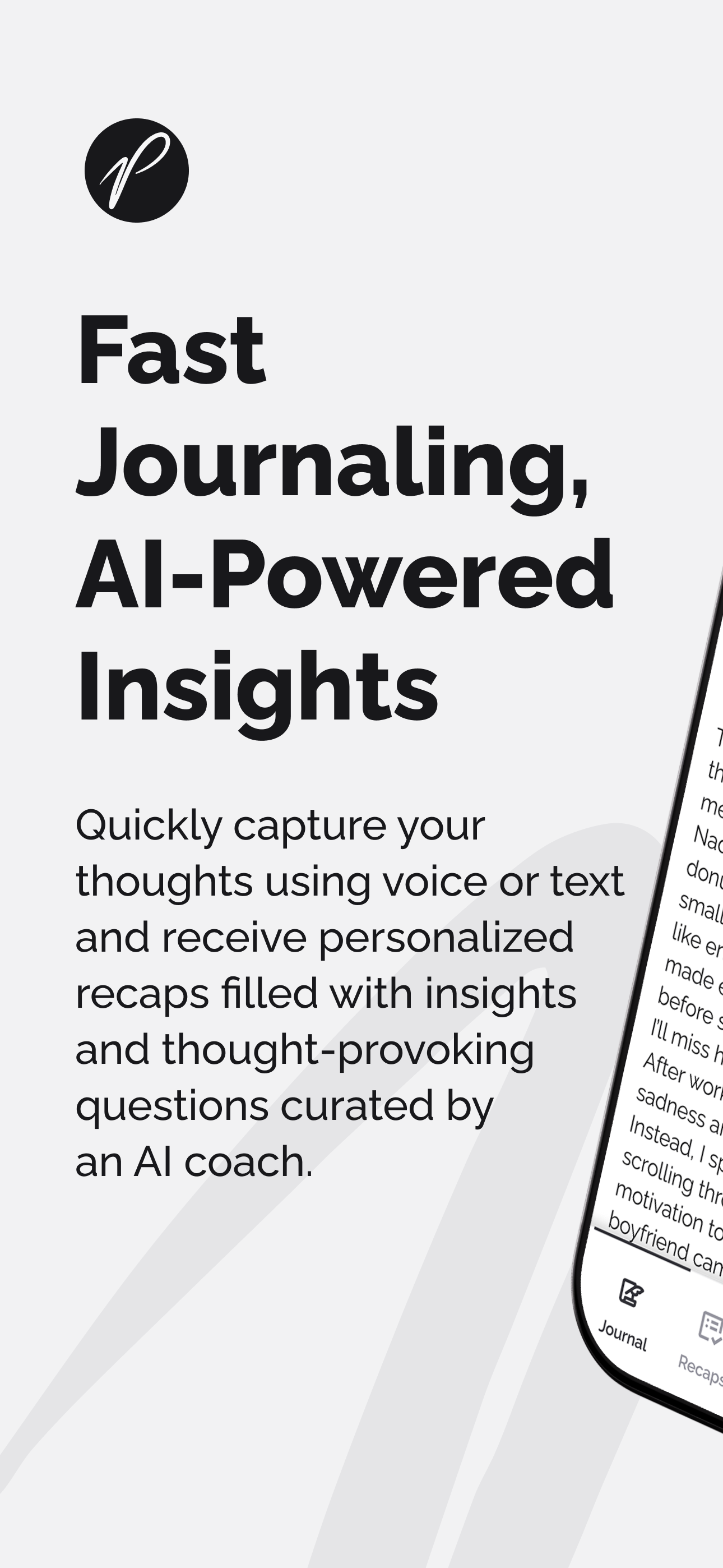
I co-founded Pausa, a journaling app that lets people write via WhatsApp, email, or voice and get AI-powered weekly recaps and personalized insights. I was the sole designer: I handled product strategy, visual identity, interaction design, and the design system. 50+ paid users in the first four months. Live on iOS.
Download on the App Store →Journaling is one of those habits everyone knows is good for them and almost nobody keeps up. The barriers are always the same: it takes too long, it feels isolated, and there's no feedback loop. You write into the void and hope it helps.
We saw an opportunity to make journaling feel less like a chore and more like a conversation. If people could send a voice note or a text through a tool they already use every day, and get something meaningful back, the habit might actually stick.
We started with the simplest version we could build: an email-only journaling system. Users sent entries via email; every week, the AI summarized them and sent back a personalized recap with advice. No app, no interface, just email in and email out.
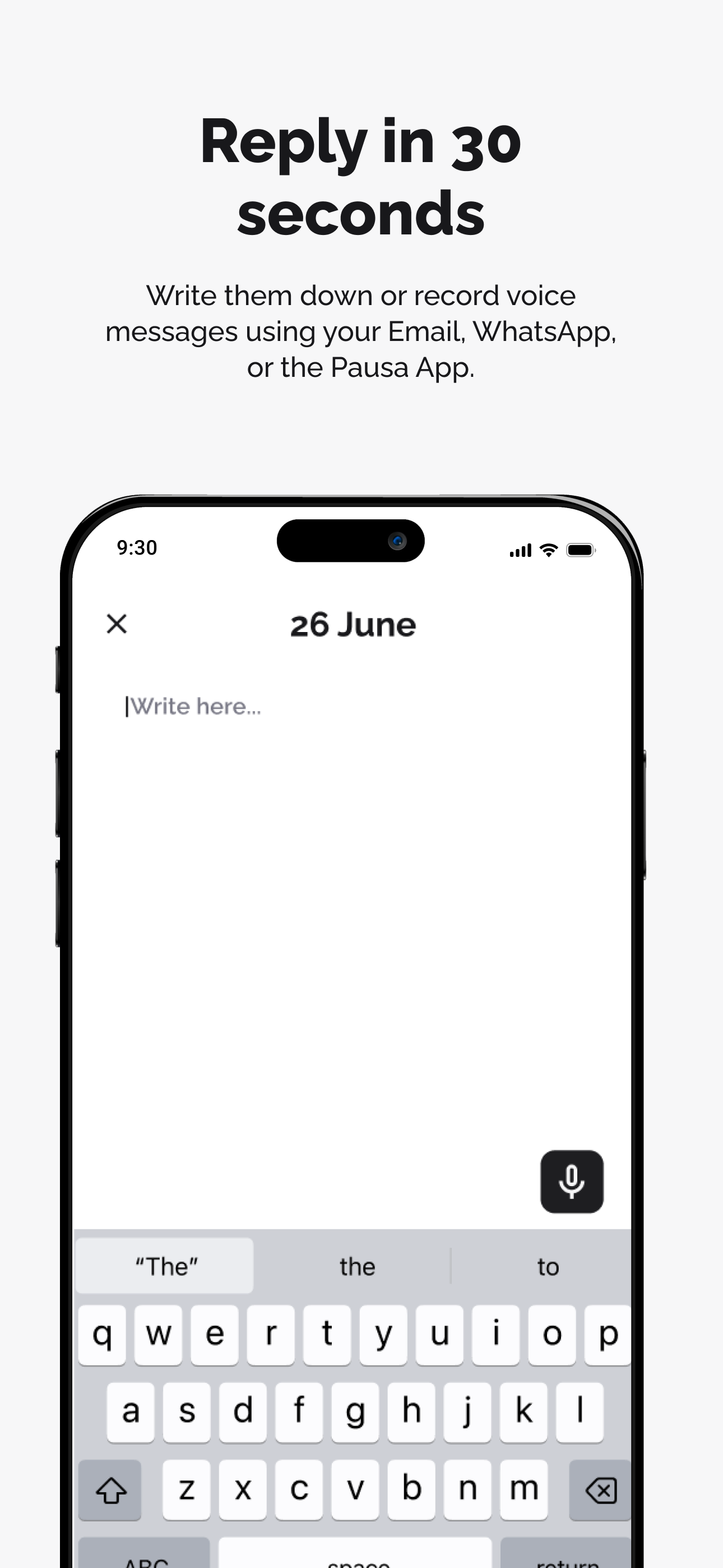
That version validated two things fast: people wanted AI-generated insights from their journal entries, and they wanted to write using tools they already had. It also revealed something we didn't expect: users preferred WhatsApp over email, and many wanted to journal by voice rather than text. That insight reshaped the product.
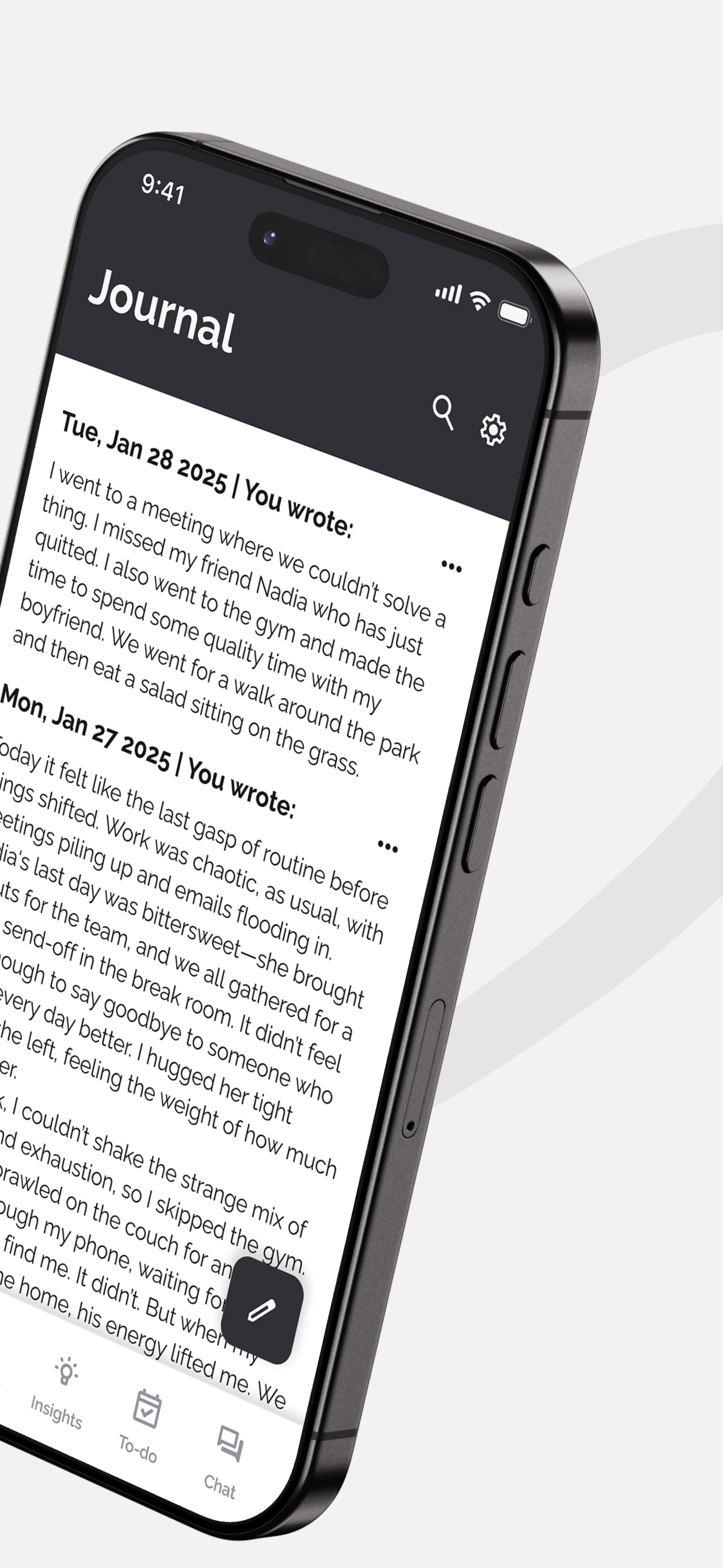
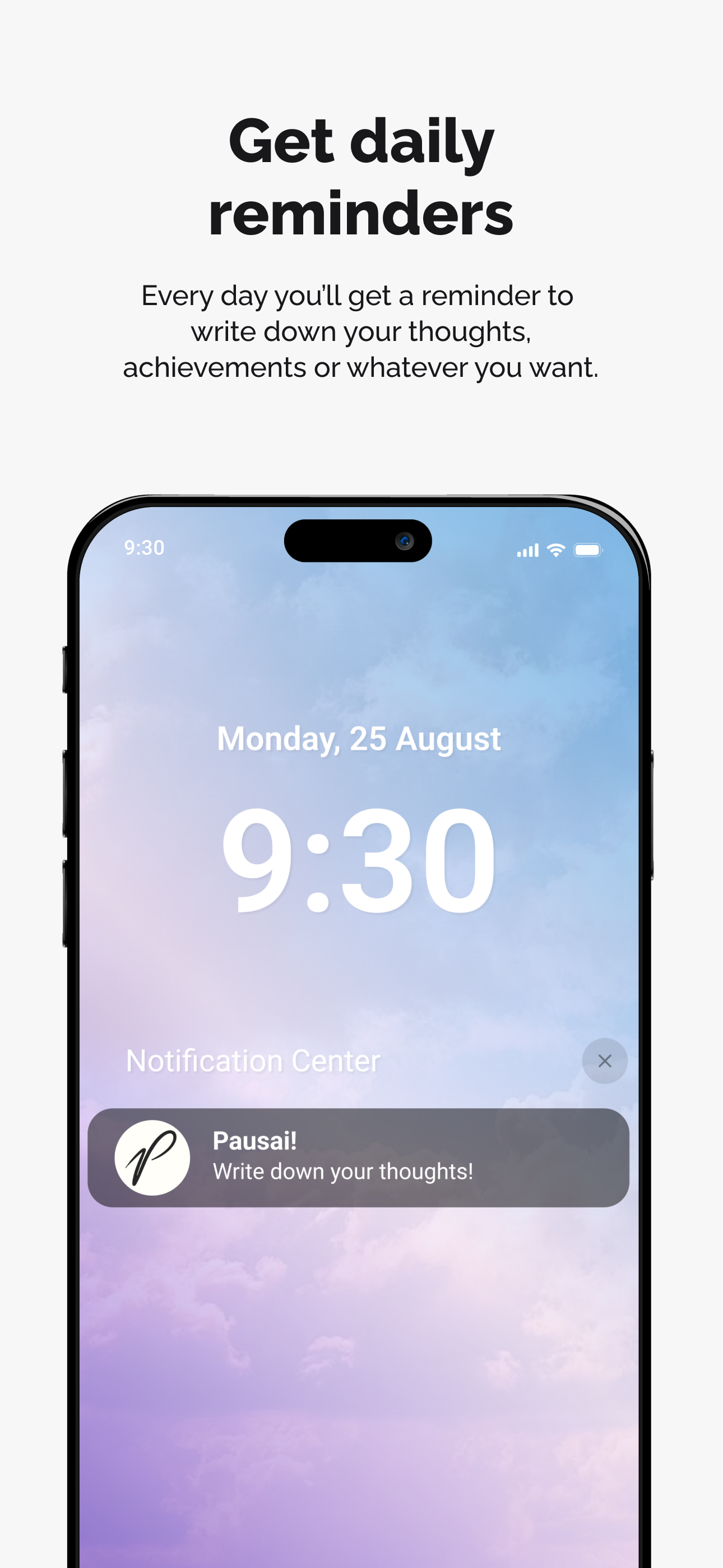
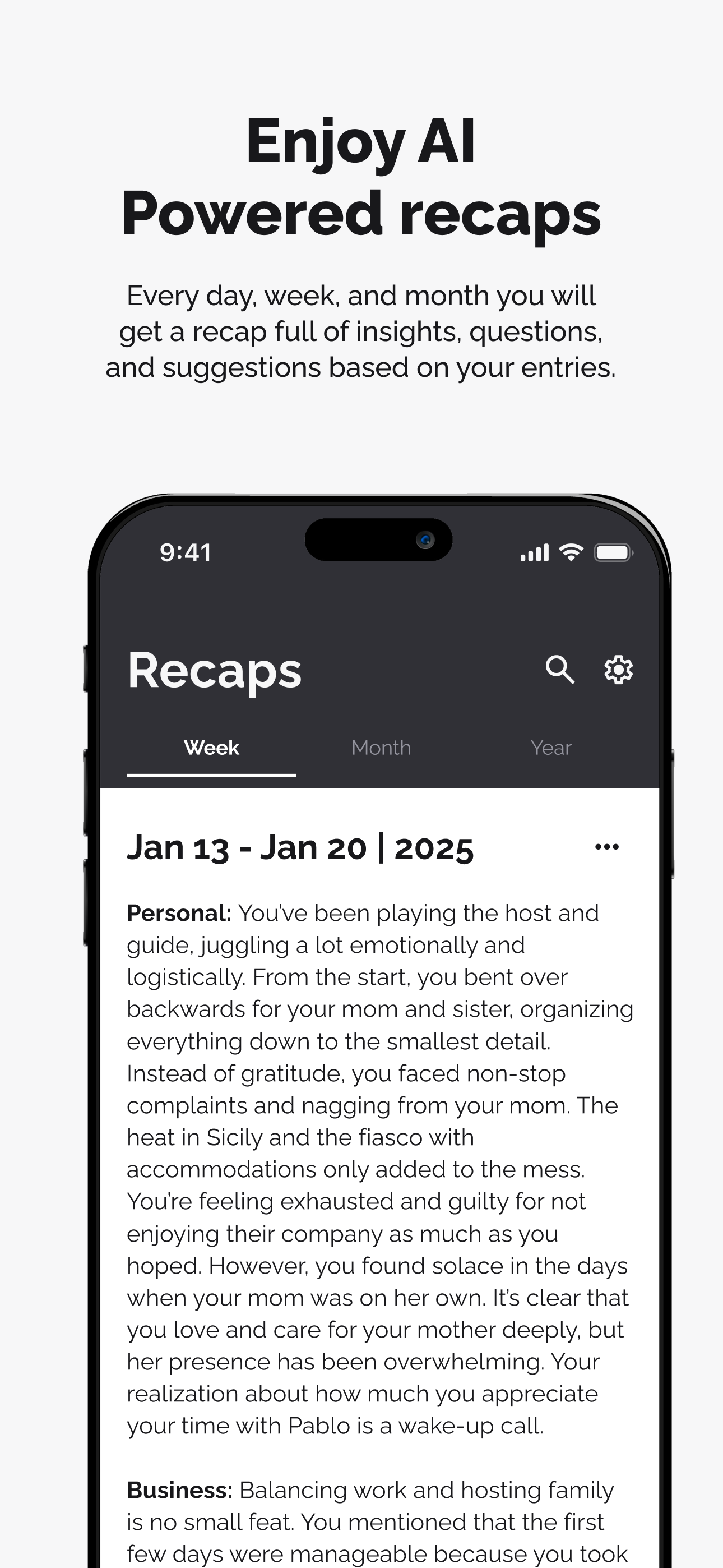
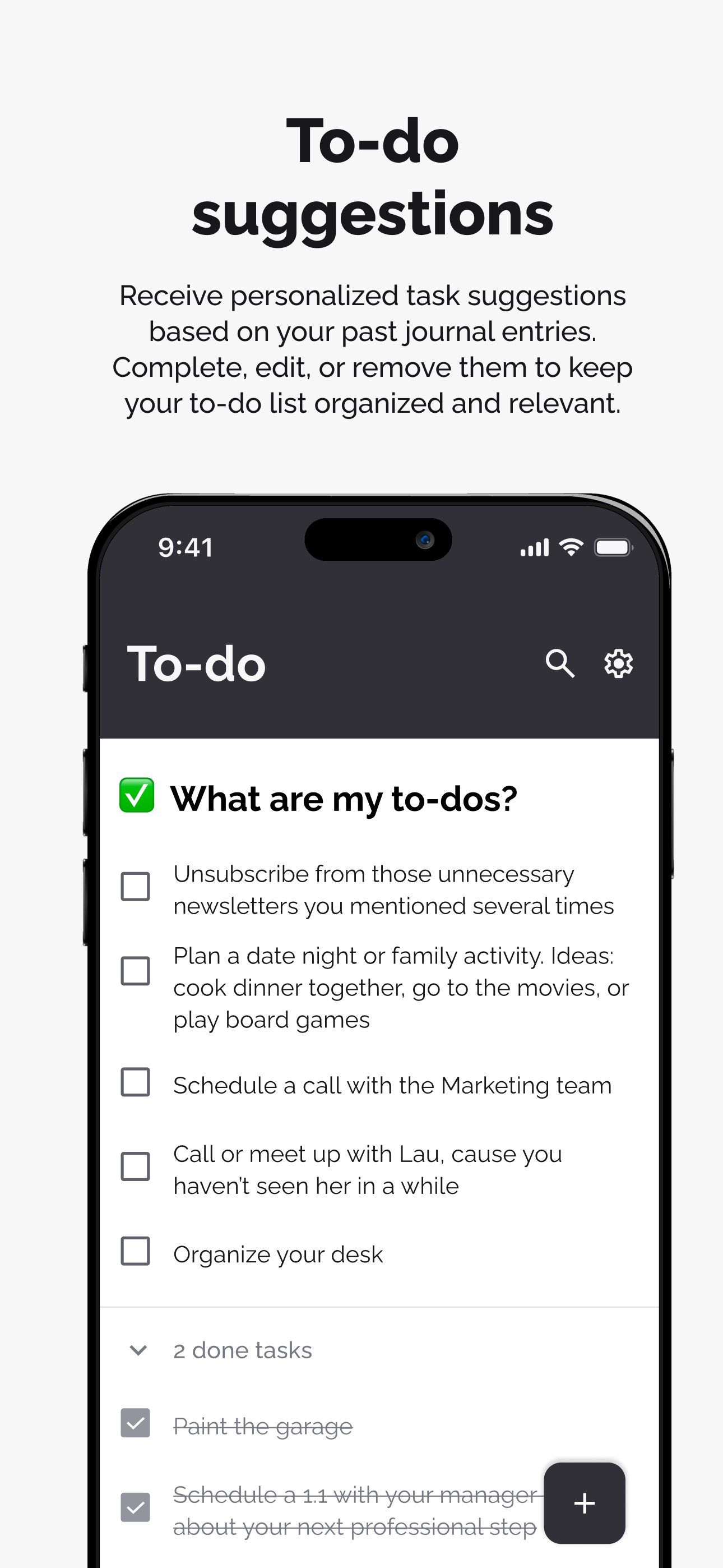
With the concept validated, we built the iOS app. The core loop stayed simple: submit an entry (voice or text, via WhatsApp, email, or the app), and receive weekly and monthly AI-powered recaps with personalized insights, themes, and action items.
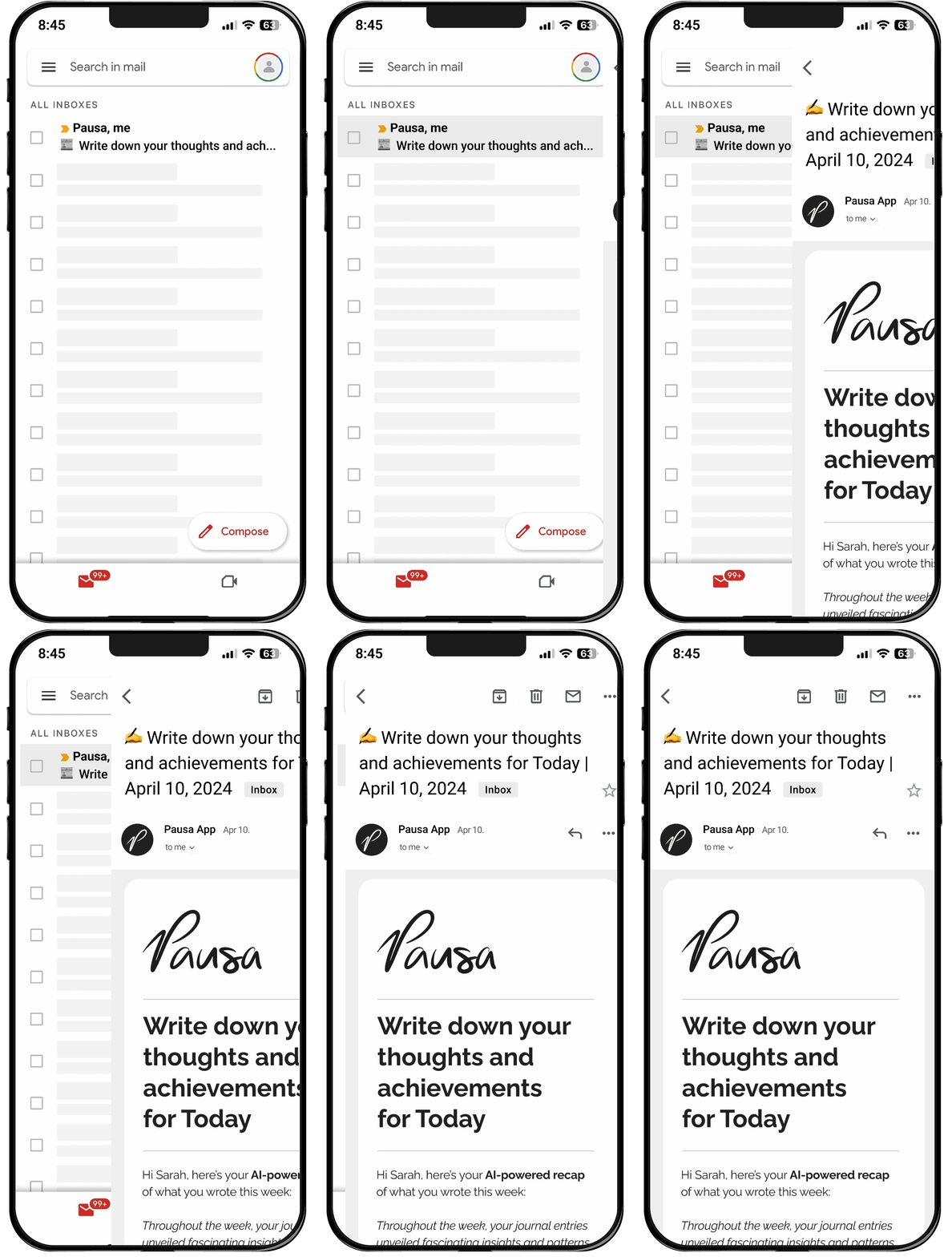
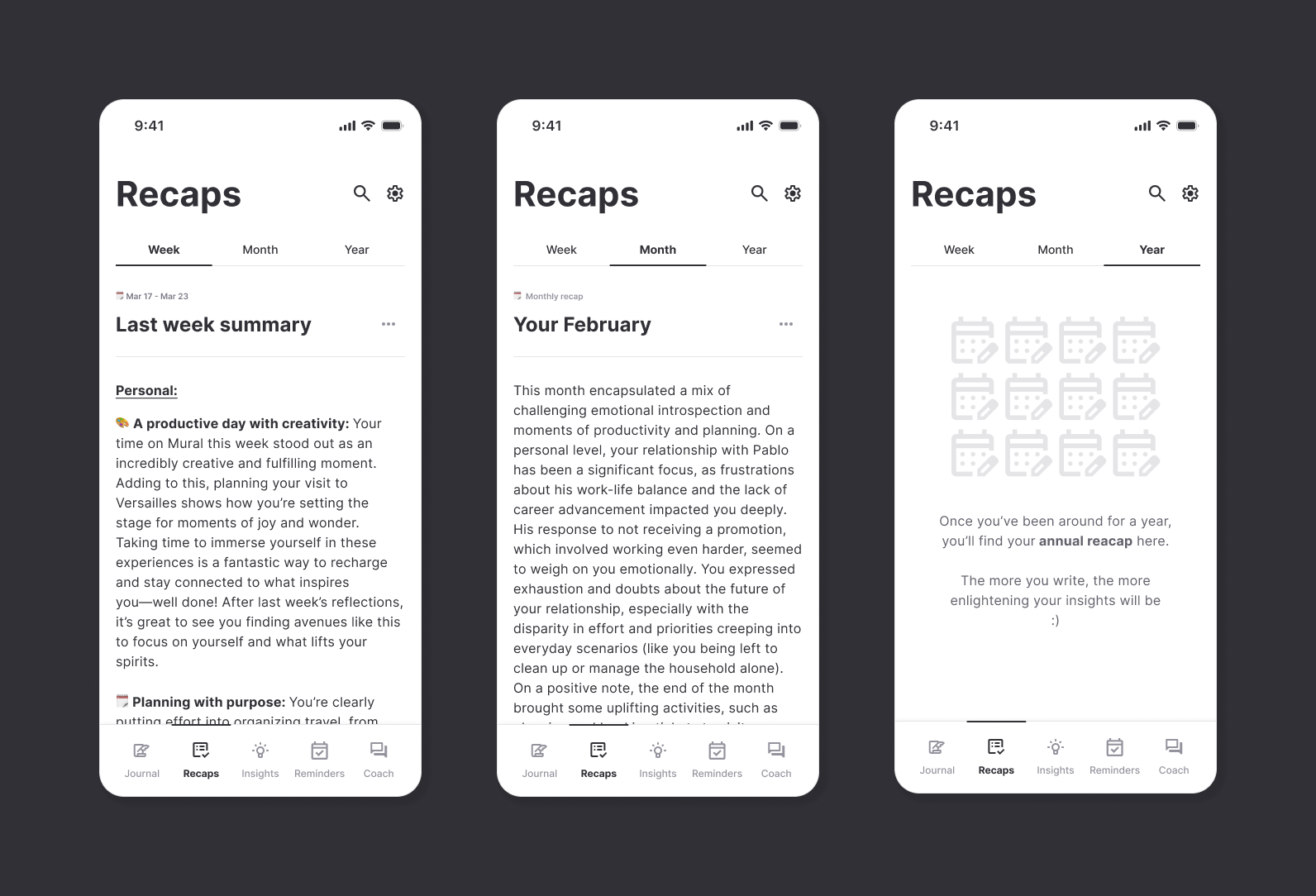
The core output was the recap. Every week and every month, the AI read through everything you'd written and returned a personal summary: the themes you kept coming back to, shifts in mood, patterns across time. We iterated on the prompts constantly, tuning them to better match each person's tone and writing style. Every recap ended with action items. Understanding your patterns is only half the loop. Pausa was built to close it: to push you from awareness to actual change.
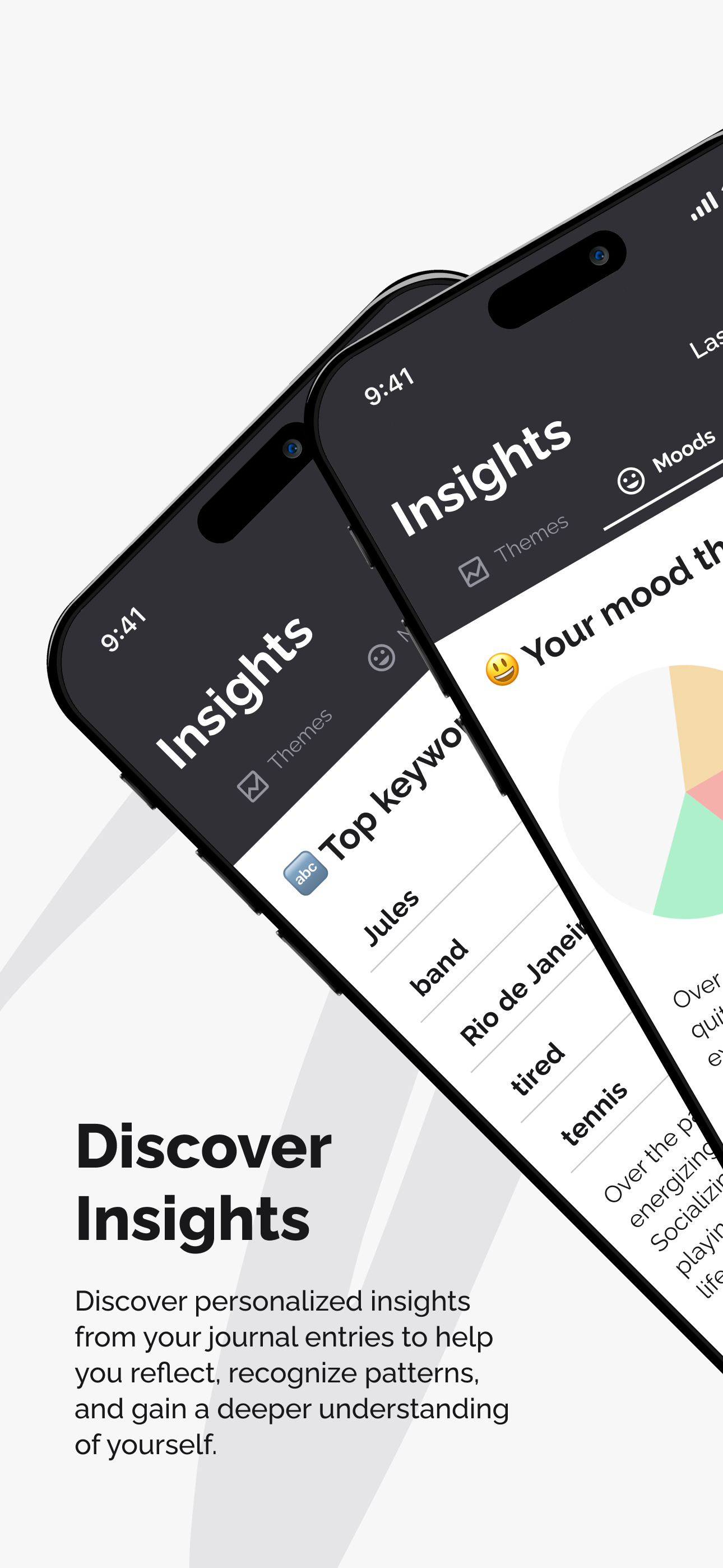
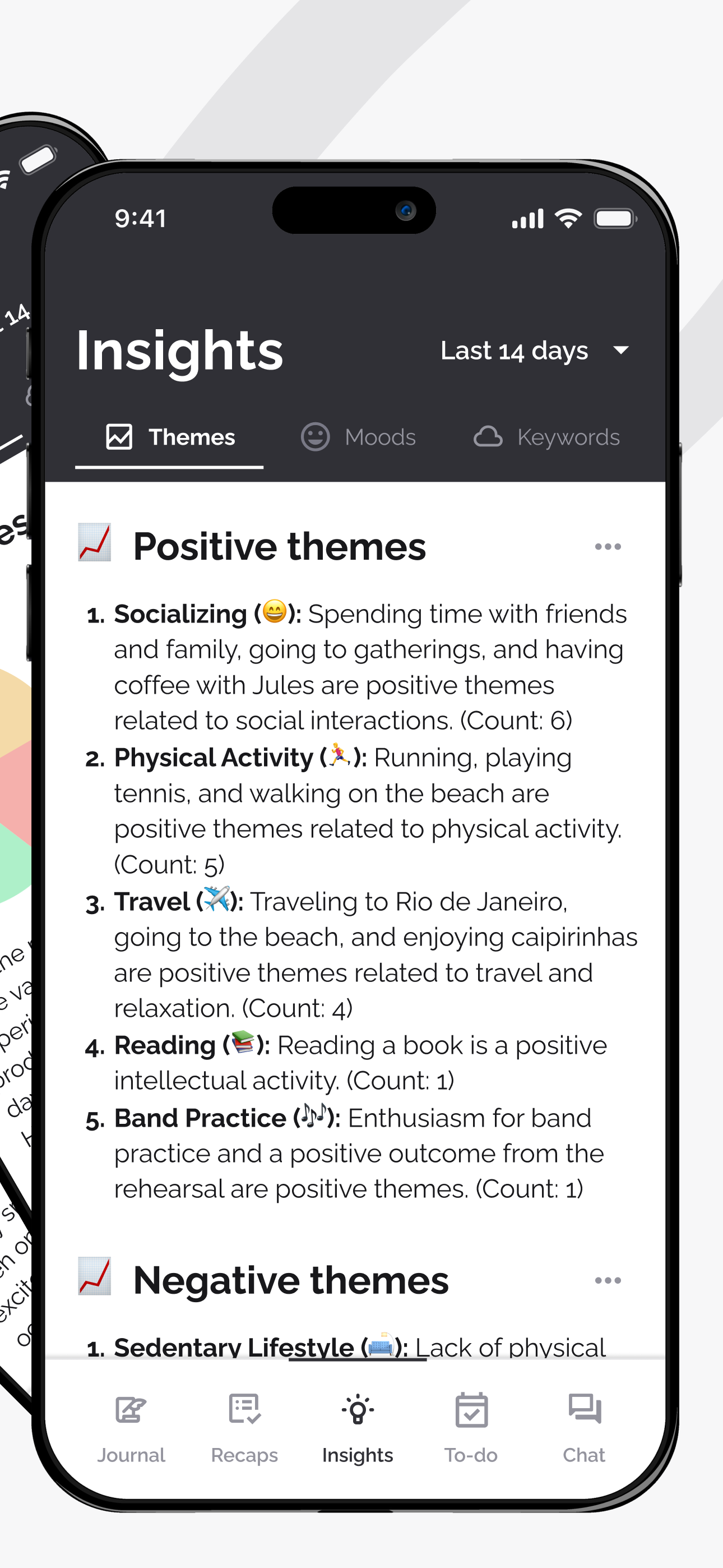
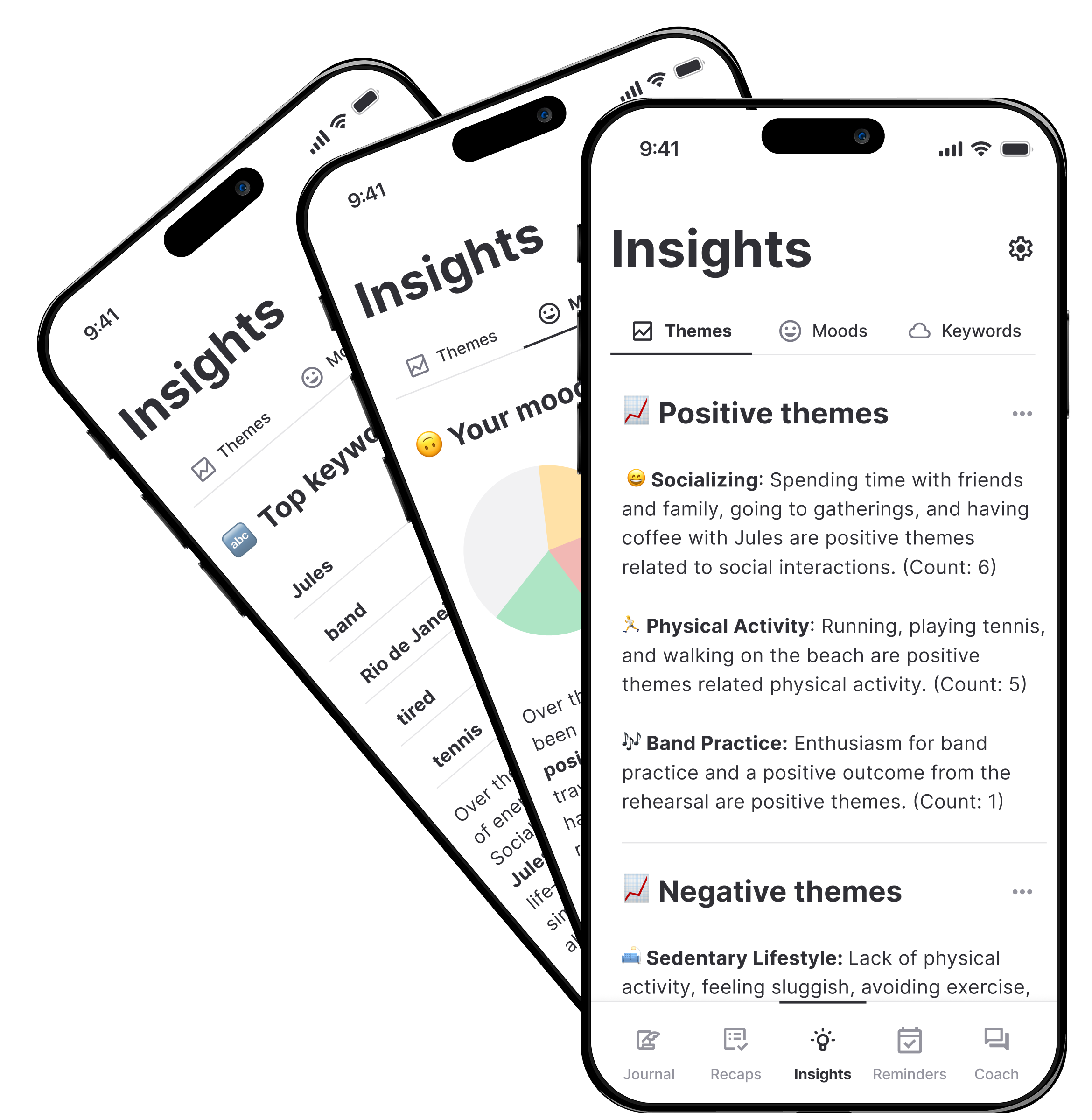
We also built Insights: an AI layer that reads across your entries and surfaces patterns over time. Traditional journaling has a blind spot: you write and write, but nothing synthesizes it back to you. The meaning stays buried in hundreds of entries you'll never re-read. Insights closes that loop. Every week and every month, it hands back a picture of what's actually going on: recurring themes, mood shifts, topics you keep circling. The journal finally talks back.
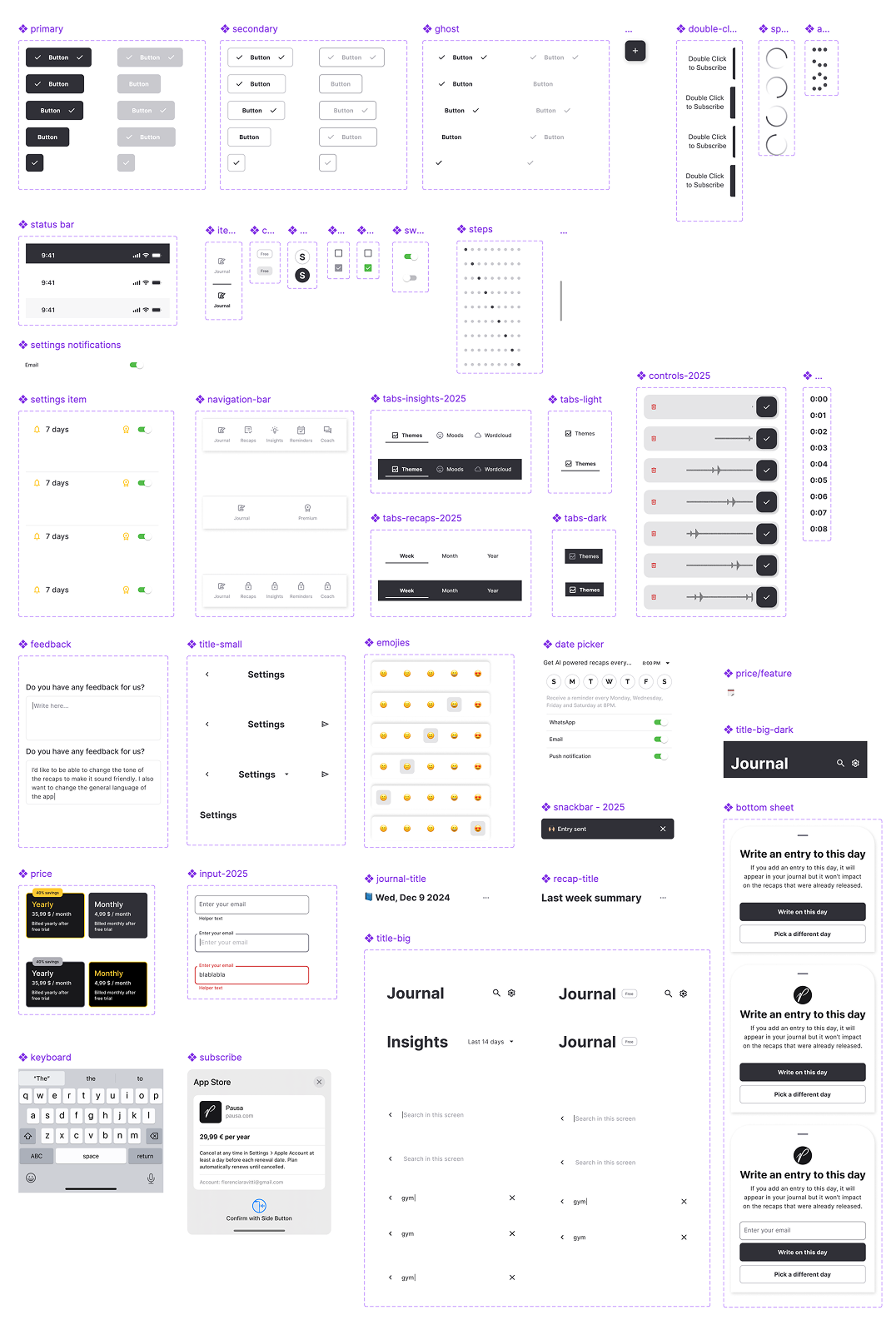
I designed everything: the logo, the visual identity (monochromatic, black and white, a handwritten logotype that nods to real journals), the interaction design, and a lightweight design system I built from scratch after realizing that adapting an existing system was slower than starting fresh.
Validate before building. We could have jumped straight into an app. Instead, we tested the core value proposition with email only. That saved us months of building features nobody wanted and gave us real user data to design from.
Meet users where they are. The decision to integrate WhatsApp and voice came directly from user behavior, not our roadmap. We designed the product around how people actually communicate, not how we assumed they'd journal.
Reverse trial. We gave every user full access to all premium features for 14 days before asking them to pay. The logic: our AI insights are the product's main value, and you can't judge them from a feature list. Users needed to experience a few weekly recaps before they'd understand what they were paying for.
Simplify onboarding ruthlessly. Our first onboarding had 12 steps. Engagement was low and sign-ups dropped off. We cut it down, streamlined the flow, and conversion jumped to 70%. Every screen you add to onboarding is a screen where someone leaves.
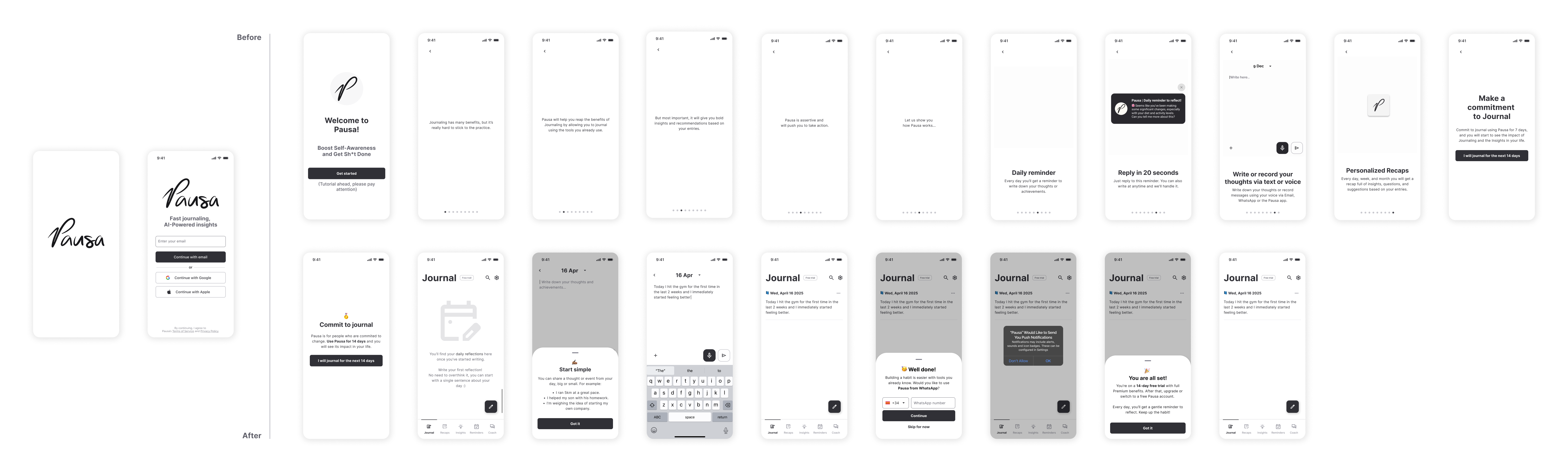
50+ paid users within four months of launch. 70% onboarding conversion rate after the redesign. Voice journaling became the most popular entry method, confirming the bet on meeting users where they already are.
The biggest lesson was about scope. With a three-person team working on this alongside full-time jobs, every feature decision was a tradeoff against time. That constraint forced discipline about what mattered: the core loop (write, reflect, grow) had to be flawless before we added anything else.
It's the same principle I apply to product work at scale: ship the essential thing well, then expand.